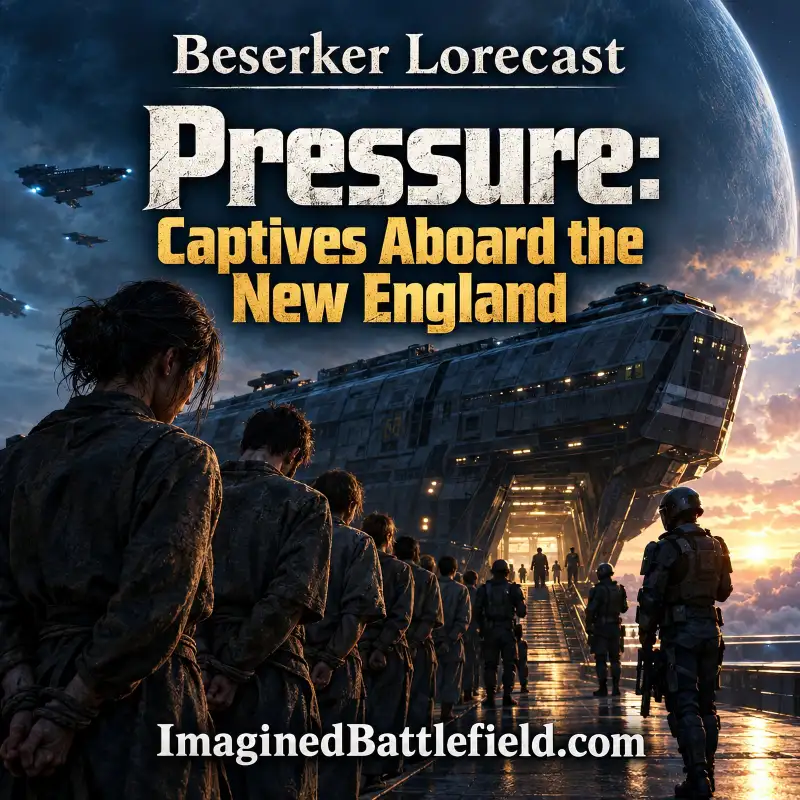
Pressure: Captives Aboard the New England
Viewed as military history, Pressure belongs to the long war after the early Karlsen victories, where technology and command judgment continually interact. At the center is strategy, command, human adaptability, and the consequences of fighting an enemy devoted to extermination,…
Viewed as military history, Pressure belongs to the long war after the early Karlsen victories, where technology and command judgment continually interact. At the center is strategy, command, human adaptability, and the consequences of fighting an enemy devoted to extermination, linking tactical choices to the larger ability to keep resisting. Humanity’s recurring advantage is the ability to improvise, deceive, cooperate, or reinterpret a problem in ways a rigid extermination program may not expect. The nonlinear structure makes context important, so the episode separates immediate evidence from later historical interpretation. The surrounding season ultimately examines endurance, improvisation, and institutional rivalry in a conflict no single victory can end. Attention remains on what changes for the next decision: available forces, information, political freedom, and the safety of civilians. That perspective keeps the focus on military consequences while preserving the contrast between programmed purpose and living behavior. Visit ImaginedBattlefield.com for more military and science fiction.